
Stretching is a simple yet powerful way to improve your overall health and well-being. Whether you’re an athlete, someone who spends long hours sitting at a desk, or just looking to add some gentle movement to your day, stretching at home can help increase flexibility, reduce muscle tension, and promote relaxation. This beginner’s guide will walk you through the basics of stretching, share some easy stretches to start with, and offer tips to make stretching a regular part of your routine.
Why Stretching Matters
Before jumping into specific stretches, it’s helpful to understand why stretching benefits the body:
– Improves Flexibility: Stretching helps lengthen muscles and improve the range of motion in your joints.
– Enhances Circulation: Stretching increases blood flow to muscles, which can aid recovery and reduce soreness.
– Reduces Muscle Tension: Targeted stretches can release tightness, helping to prevent injuries.
– Boosts Posture: Regular stretching helps balance muscles around joints, improving posture.
– Promotes Relaxation: Gentle stretching relaxes the body and mind, easing stress after a long day.
When and How Often to Stretch
You can stretch almost any time of the day. Many people find it beneficial:
– In the morning to wake up the body
– During breaks at work to relieve stiffness
– After exercising to cool down muscles
– In the evening to wind down and relax
Aim to stretch at least 3-4 times a week, gradually increasing frequency as your body adapts.
Basic Tips for Safe Stretching
– Warm Up First: Stretching cold muscles may cause injuries. Warm up with light activity like walking or marching in place for 5 minutes.
– Move Slowly: Ease into each stretch gradually and avoid bouncing or jerky movements.
– Listen to Your Body: Stretch to the point of mild tension but not pain. If it hurts, ease off.
– Breathe Deeply: Inhale and exhale slowly to help your muscles relax.
– Hold and Repeat: Hold each stretch for 15-30 seconds and repeat 2-3 times.
Simple Stretches to Start With
Here are some beginner-friendly stretches you can do at home without any special equipment:
1. Neck Stretch
Relieves neck stiffness caused by poor posture or long screen time.
– Sit or stand up straight.
– Gently tilt your head toward one shoulder until you feel a stretch on the opposite side.
– Hold for 20 seconds.
– Repeat on the other side.
2. Shoulder Rolls
Loosens tight shoulders and upper back.
– Stand or sit comfortably.
– Roll your shoulders forward in a circular motion 10 times.
– Reverse and roll them backward 10 times.
3. Cat-Cow Stretch
Improves spine flexibility and releases lower back tension.
– Start on your hands and knees in tabletop position.
– Inhale, arch your back, lifting your head and tailbone (Cow Pose).
– Exhale, round your back, tucking your chin and pelvis (Cat Pose).
– Repeat for 10 rounds, moving slowly with your breath.
4. Seated Forward Bend
Stretches the hamstrings and lower back.
– Sit on the floor with your legs extended straight.
– Inhale and lengthen your spine.
– Exhale and fold forward from the hips, reaching toward your toes.
– Hold for 20-30 seconds without forcing.
– Return to sitting position slowly.
5. Standing Quadriceps Stretch
Stretches the front thigh muscles.
– Stand near a wall or chair for balance.
– Bend one knee and grab your ankle or foot behind you.
– Keep knees close and pelvis tucked.
– Hold for 20 seconds.
– Switch legs and repeat.
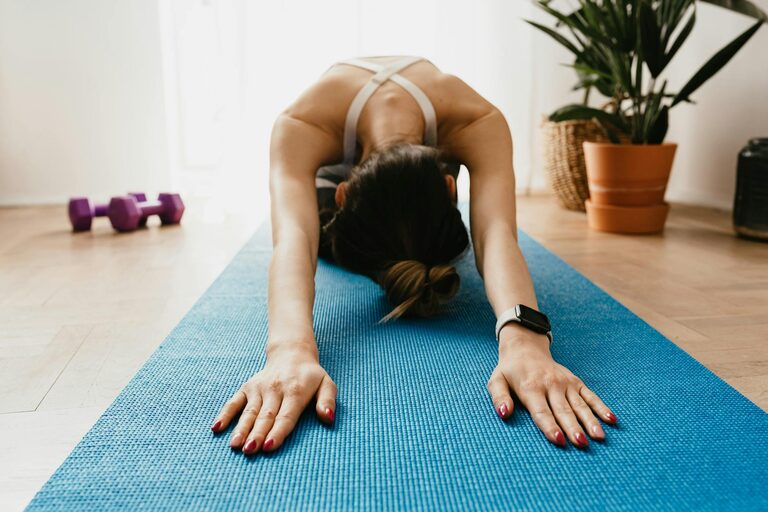
6. Child’s Pose
A gentle stretch for the back, hips, and shoulders.
– Kneel on the floor, sit back onto your heels.
– Extend your arms forward and lower your forehead to the floor.
– Breathe deeply and hold for 30 seconds to a minute.
Building a Stretching Routine
To create a well-rounded stretching routine:
- **Warm up for 5 minutes** with light cardio.
- **Perform stretches for all major muscle groups:**
– Neck and shoulders
– Back and spine
– Arms
– Legs (quadriceps, hamstrings, calves)
– Hips
- **Hold each stretch for 15-30 seconds** and repeat 2-3 times.
- **Finish with deep breathing or a relaxation pose** like Child’s Pose.
Try to set aside 10-15 minutes daily or every other day. Consistency is key for long-term benefits.
Tips to Stay Motivated
– Stretch with a family member or friend to make it fun.
– Create a peaceful space with soft lighting or calming music.
– Use reminders on your phone or calendar to schedule stretching time.
– Track your progress by noting improved flexibility or reduced stiffness.
– Combine stretching with other gentle activities like yoga or walking.
When to Avoid Stretching or See a Professional
While stretching is safe for most people, avoid stretching:
– If you have a recent injury or acute pain
– If you experience sharp or worsening pain during stretching
– On swollen or inflamed joints
If you have ongoing pain, limited movement, or health concerns, consult a physical therapist or healthcare provider before starting a routine.
Final Thoughts
Stretching is a low-cost, effective way to care for your body at home. By incorporating simple stretches into your day, you can improve flexibility, reduce muscle tightness, and feel more relaxed. Start slowly, listen to your body, and enjoy the benefits that come with regular stretching.
Ready to get started? Grab a mat, find a quiet spot, and give these beginner stretches a try today!